The Sodder Children: Five Kids Vanished in a Christmas Eve Fire That Left No Bones
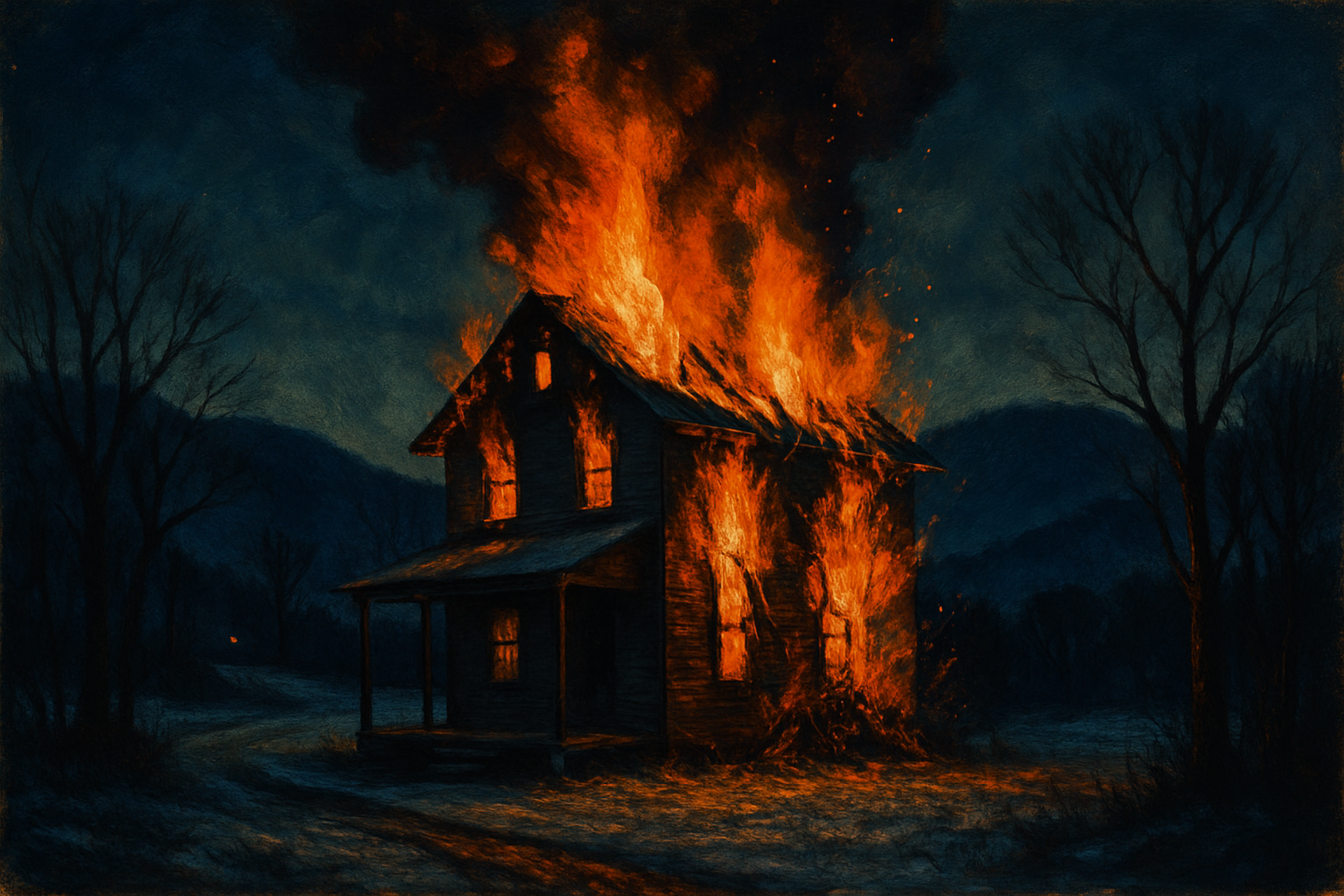
The fire burned the house to the ground in less than an hour, and when it was over there were no children in the ashes.
Just after midnight on Christmas Day, 1945, the frame home of George and Jennie Sodder outside Fayetteville, West Virginia, went up in flames. Nine of their ten children were home that night. Four escaped with their parents into the freezing dark. Five — Maurice, Martha, Louis, Jennie, and Betty, ranging from five to fourteen years old — were never seen again. When the embers cooled the following morning, the family and the community expected the worst: five small bodies in the wreckage. Instead, a search of the smoldering basement turned up nothing recognizable — no bones, no teeth, no remains that could be identified as human. For more than eighty years, George and Jennie Sodder refused to believe their children had died in that fire at all. The question of what happened to them has never been answered.
The Location
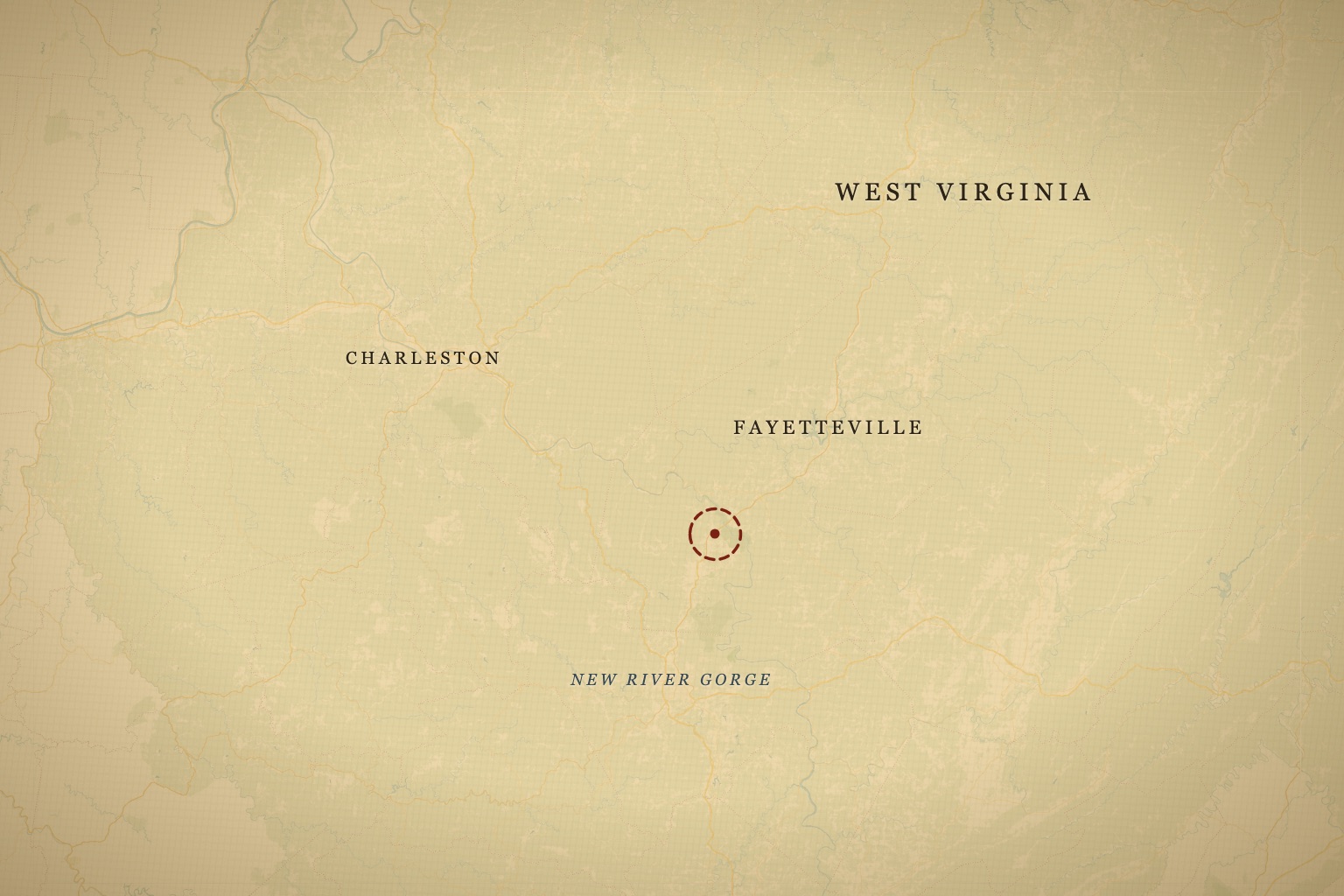
Fayetteville sits in the rugged coal country of southern West Virginia, in Fayette County, roughly forty miles southeast of Charleston and perched above the deep gorge of the New River. In the 1940s it was a small Appalachian town of miners, timber crews, and immigrant families drawn by the region's industry. The mountains hemmed in the little communities strung along the roads, and winter arrived early and hard. On the night of the fire, the ground outside was cold enough that the family remembered the freezing air as they fled the burning house. George Sodder — born Giorgio Soddu in Sardinia, Italy — had emigrated as a young man and built a successful trucking and coal-hauling business in the area. He and Jennie raised their large family in a two-story frame house on the outskirts of town along the old road toward Fayetteville.
The Sodders were, by the standards of the community, doing well. George owned his trucks, employed men, and had put down the kind of roots that made his family visible in a place where most people knew one another. He was known as opinionated and outspoken, particularly in his low opinion of Benito Mussolini and Italian fascism — a stance that reportedly earned him heated arguments with some of the local Italian-American community during the war years, when loyalties among immigrants from Italy were a genuinely sensitive matter. That detail, ordinary at the time, would take on outsized weight in the years that followed. The house is gone now, but the site along the highway remained in the family's possession for decades, marked eventually by a large billboard the Sodders erected to keep their children's faces before the public. For years, anyone driving that stretch of road would pass the enlarged photographs and the offer of a reward, a permanent, roadside insistence that the case was not closed.
The Hunt
The Sodder case is the kind of American disappearance that draws investigators precisely because it sits at the seam between tragedy and something stranger — a documented fire, a documented set of missing children, and a physical scene that refused to behave the way a fatal house fire should. Researchers who have worked the case return again and again to the same catalog of anomalies the family compiled over the years. Taken one at a time, each oddity might be explained away. Taken together, they form the reason the Sodders spent the rest of their lives refusing the official answer.
The strangeness began before the fire. Weeks earlier, a stranger had come to the house looking for hauling work, wandered to the rear of the property, and warned George that his fuseboxes would "cause a fire someday" — this despite the home's wiring having recently been inspected and pronounced safe by the local power company. Around the same time, an insurance salesman George had turned away reportedly told him he would be sorry, that his house would go up in smoke and his children would be destroyed. The remark, the family later said, was tied directly to George's outspoken views. In the weeks before Christmas, one of the older Sodder sons also noticed a man parked along the highway, watching the children as they came home from school. None of it seemed urgent at the time. Only afterward did the pieces line up into something that looked deliberate.
On the night itself, a series of small malfunctions stacked up. Around 12:30 a.m., the telephone rang; Jennie answered and heard an unfamiliar woman ask for a name she did not recognize, against a background of clinking glasses and laughter, before the caller laughed strangely and hung up. Jennie went back to bed but noticed the downstairs lights were still on and the front door unlocked — details out of place in a house settling in for the night. Soon after, she woke to the smell of smoke and found fire spreading from around George's office area. The family's telephone line was later found to have been cut, not burned through, and located some distance from the house. George's two coal trucks, which ran perfectly the day before, would not start when he tried to use them to reach the upper windows. A ladder that always hung on the side of the house was gone, discovered afterward flung away down an embankment.
When the fire took hold, George could not get back upstairs to the sleeping children — the staircase was already engulfed, and he burned his arm trying. With no ladder and no working truck, he tried to climb the outside of the house and could not reach the second-floor windows where the five children slept. Neighbors and the older children ran to summon help, but reaching the fire department itself proved difficult; a call could not immediately be placed. The Fayetteville fire department, short-staffed with many local men away at war, did not arrive until roughly 8:00 a.m., hours after the house had collapsed into its own foundation. By the time anyone with equipment stood on the property, there was nothing left to fight and nothing left to save.
The case reached a national audience again when History's Greatest Mysteries devoted a full episode to it — "The Sodder Children Disappearance" (Season 3, April 2022) — walking through the fire, the missing remains, and the family's decades of unanswered questions for a new generation of viewers.
What History Says
The official record is grimly conventional: a fire, likely electrical, that killed five children who could not escape the upper floor. The coroner's inquest ruled the deaths accidental, attributing the blaze to faulty wiring. Death certificates were issued for the five children in the weeks that followed. On the face of it, a house fire in a wood-frame home in 1945, with no functioning fire response for hours, is more than capable of total destruction. The upstairs bedrooms where the children slept were exactly the part of the structure that would burn longest and collapse first, and the delay before anyone with hoses and water arrived meant the fire had every opportunity to do its worst.
But the family — and generations of researchers after them — pressed on the physical facts that the official story never satisfied. Chief among them: the absence of remains. A fire hot enough to reduce five children's bodies to nothing, bones and teeth included, in under an hour is not what fire science supports. Human bone is notoriously resistant to fire, and even crematoria, which are engineered to destroy a body, operate at sustained high temperatures for far longer than a collapsing house fire delivers, and still leave identifiable fragments behind. That five bodies could vanish so completely in a blaze the family said lasted less than an hour was, to those who studied the scene, the central impossibility. Adding to the doubt, household appliances in the home did not fully melt, suggesting the fire — however destructive — had not reached the extreme, sustained temperatures that total cremation would require. When the Sodders later hired a private investigator and, in 1949, brought in excavators to dig into the site, the material recovered was examined and reported to be animal bone, not the remains of five children.
Then came the sightings and the fragments that kept the case from ever fully closing. A woman at a tourist stop along the road between Fayetteville and Charleston reported serving the children breakfast the morning after the fire, saying they arrived in a car with Florida license plates. A Charleston hotel operator claimed she had seen four of the children days later, accompanied by adults who spoke Italian and grew hostile and guarded when she tried to speak with them. Sightings like these trickled in for years, some vague, some specific, none ever verified. Most famous of all: decades later, in the late 1960s, Jennie Sodder received an envelope postmarked Kentucky containing a photograph of a young man who bore a striking resemblance to Louis, the boy who would have been about nine at the time of the fire. On the back was a cryptic scrawl — "Louis Sodder," a reference to a brother, and a string of numbers no one could decode. The family enlarged the photograph and mounted it on their roadside billboard alongside the images of the five children. Attempts to trace it led nowhere.
The Verdict
Nothing about the Sodder case is settled. The official file calls it an accidental fire that killed five children; the physical scene — no identifiable remains, appliances left intact, a fire that consumed a two-story house in under an hour — has never squared with that verdict for the people who studied it most closely. The list of unexplained details around the fire, from the cut phone line to the missing ladder to the trucks that would not start, has never been satisfactorily reconciled with the idea of a simple electrical accident. Yet the competing theory, that the children were taken that night in an act tied to George Sodder's politics or business dealings, has never produced a single confirmed sighting, a named kidnapper, or a living child. Every lead the family chased — the breakfast waitress, the hotel operator, the photograph from Kentucky — dissolved on contact. It is a case suspended permanently between two explanations, neither of which the evidence fully supports.
George Sodder died in 1969, still convinced his children had survived the fire and been carried off into a life beyond his reach. Jennie died in 1989, having spent decades wearing black in mourning and keeping the billboard lit for anyone who might drive past and know something. She never wavered from the belief that her children were out there somewhere. The billboard along the highway came down after her death, and with it went the most visible reminder that anyone in West Virginia was still asking. The house site outside Fayetteville is real ground you can still find, quiet now and unmarked by the sign that once demanded answers. The family's questions are still standing there with it — a fire that left no bones, and five children who simply stopped existing on a Christmas morning eighty years ago.
Explore the sites mentioned in this post on the interactive map.
Open the Tracker