The Mary Celeste: The Ship That Sailed On Without Her Crew
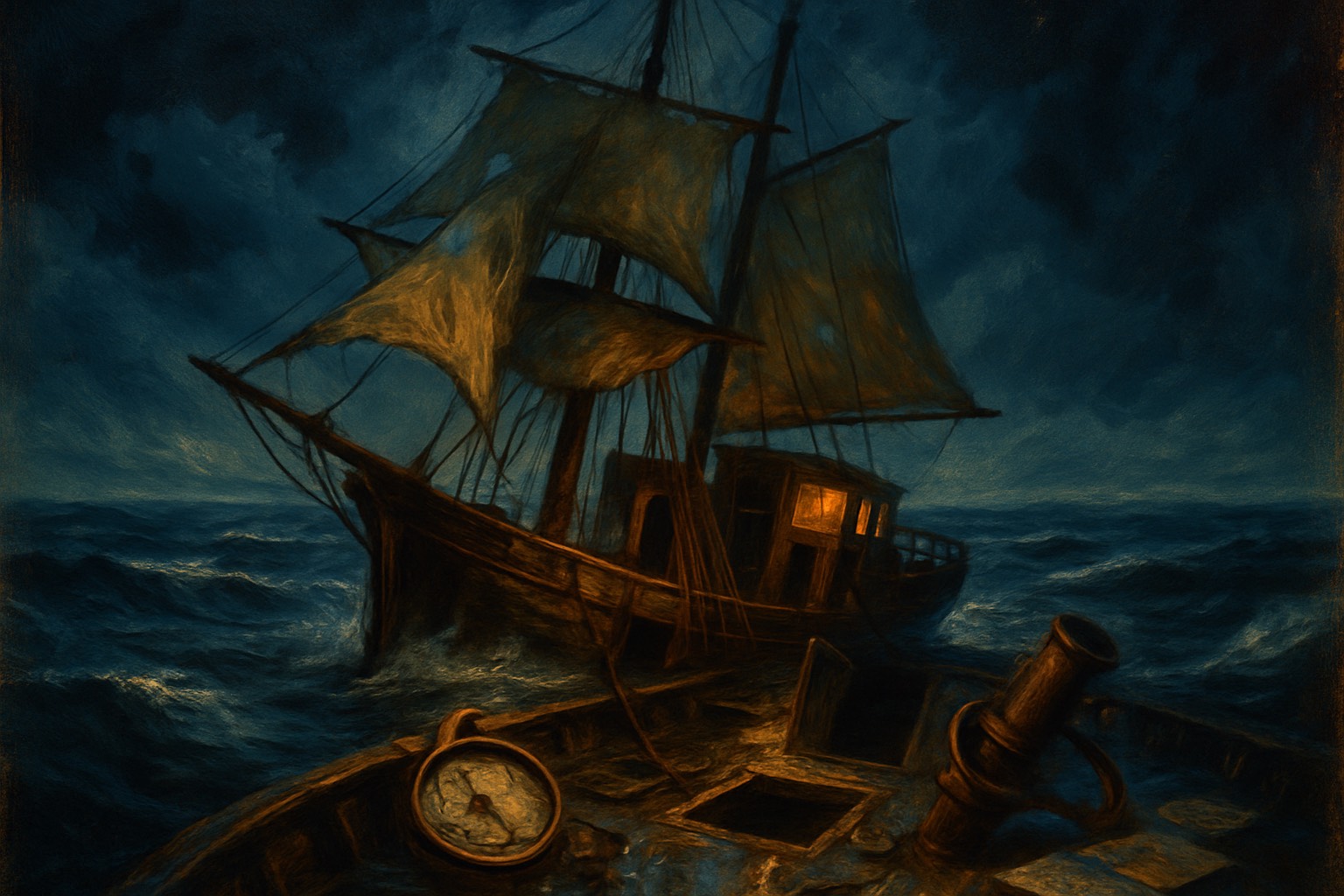
The ship was still sailing. That was the part nobody aboard the Dei Gratia could get past.
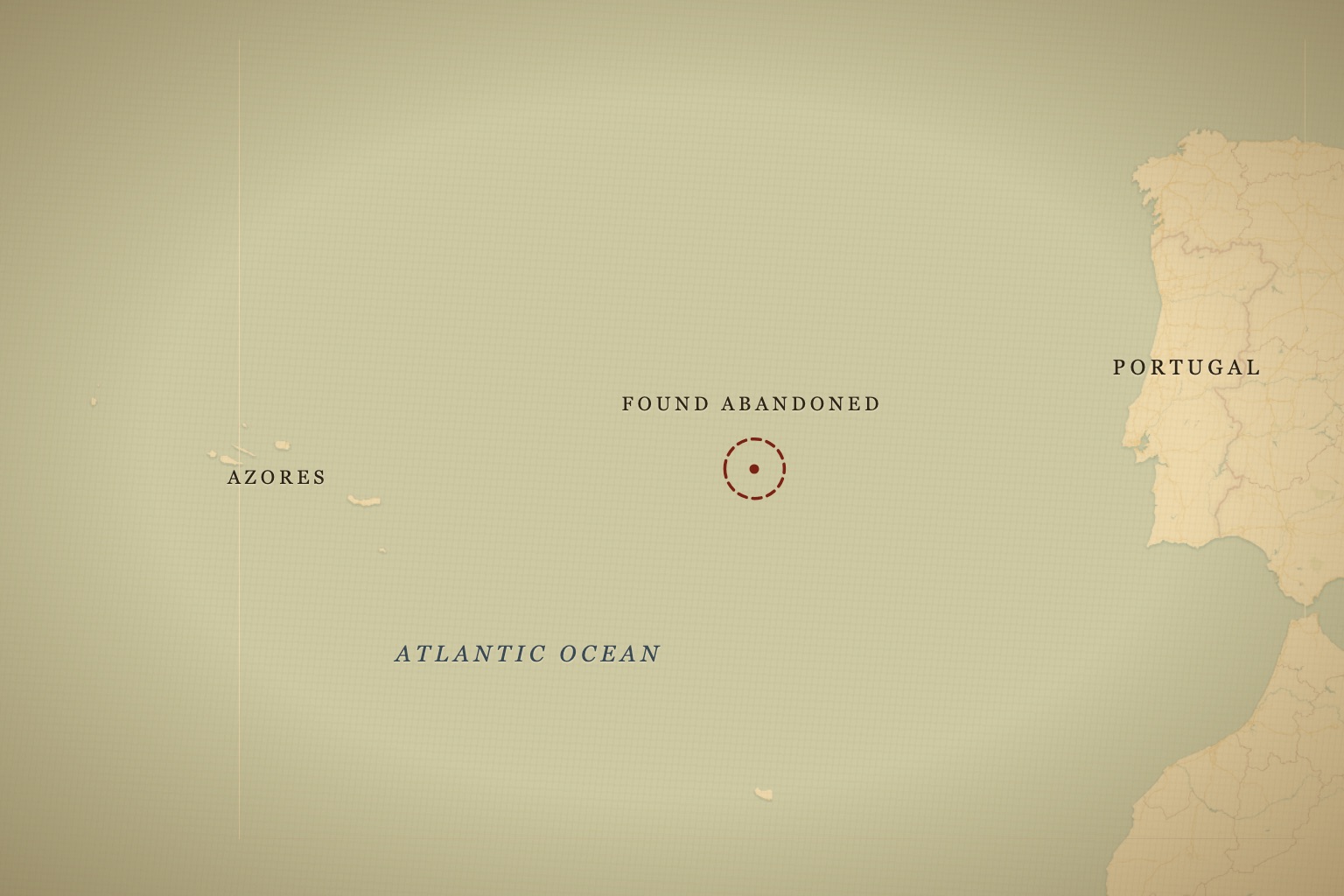
On December 4, 1872, roughly 400 miles east of the Azores, the crew of the British brigantine Dei Gratia sighted a vessel moving erratically under partial sail — yawing, drifting slightly off the wind, making headway with no one visibly at the helm. Captain David Morehouse recognized her. She was the Mary Celeste, an American brigantine that had cleared New York harbor about a week before his own ship, bound for Genoa. When his men hailed her and got no answer, Morehouse sent a boarding party across. First mate Oliver Deveau climbed aboard and found a ship that was wet, disordered, and entirely seaworthy — and entirely empty. Ten people, including the captain's wife and two-year-old daughter, had vanished from a vessel that then sailed itself, crewless, for hundreds of miles across the open Atlantic. More than 150 years later, no trace of any of them has ever been found.
The Mystery
The Mary Celeste was not a cursed hulk or a mystery ship by design. She was a working merchant brigantine — about 100 feet long, built in 1861 at Spencer's Island, Nova Scotia, and originally christened Amazon. Her early career was genuinely unlucky, in the mundane way of nineteenth-century shipping: her first captain fell ill and died at the very start of her working life, she was damaged in a collision in the English Channel, and in 1867 she was driven ashore in a storm at Cape Breton and written off. Salvaged, sold to American owners, extensively rebuilt, and re-registered, she was renamed Mary Celeste by 1869. Sailors would later read all of this backward as an omen. At the time it was just the ordinary attrition of the trade — hundreds of ships had worse histories and quieter ends. In the autumn of 1872 she was under the command of Captain Benjamin Spooner Briggs, a 37-year-old Massachusetts master mariner from a seafaring family, a man with a reputation for sobriety, competence, and fair dealing. He was, by every surviving account, the last captain you would expect to lose a ship to carelessness.
Briggs took on a cargo of 1,701 barrels of denatured alcohol — industrial alcohol, not drinkable — consigned to Genoa, Italy. He brought his wife Sarah and their two-year-old daughter Sophia Matilda along, as captains of the era sometimes did, and left their school-age son with family. His crew numbered seven: two American mates, a steward, and four German seamen with solid records. Ten souls in all. The Mary Celeste left New York in early November 1872, delayed briefly by weather, and stood out into the Atlantic on November 7.
The Dei Gratia, carrying petroleum and captained by Morehouse — who by some accounts was acquainted with Briggs, though how well is disputed — left New York about a week later on a similar route. It was Morehouse's ship that found her on December 4, drifting between the Azores and the coast of Portugal.
What Deveau's boarding party found aboard is the entire mystery, and it is worth being precise about it, because almost everything popular culture "knows" about the Mary Celeste is invented. There were no warm meals on the table — that detail comes from fiction written a decade later. What the boarders actually reported was this: about three and a half feet of water sloshing in the hold, a survivable amount for a sound ship; one of the two pumps dismantled; the fore hatch and the lazarette hatch open, the main hatch sealed; the binnacle knocked over and the compass smashed; sails partly set, some blown out. The ship's single small boat — a yawl — was gone. The chronometer, the sextant, and the ship's register were missing. The log remained, its last entry recorded at 8 a.m. on November 25, placing the ship within sight of Santa Maria Island in the Azores.
That last detail is the one that keeps investigators up at night. Between the final log entry and her discovery, the Mary Celeste had traveled several hundred miles — apparently unmanned — over the course of nine or ten days.
The Hunt
The first formal investigation began almost immediately, and it very nearly convicted the rescuers. Deveau and two men sailed the Mary Celeste to Gibraltar, where the Dei Gratia's crew filed a salvage claim — standard practice, and potentially lucrative. The Gibraltar Vice Admiralty Court's attorney general, Frederick Solly-Flood, took one look at the case and smelled blood in the water, sometimes literally: he seized on stains found on the deck and on an old sword recovered from the captain's cabin as evidence of violence, and openly theorized murder — by the crew, by the salvors, by conspiracy between Briggs and Morehouse to split a fraudulent salvage award.
The evidence refused to cooperate. The stains were scientifically tested and were not blood. The ship showed no sign of struggle. The crew's belongings — oilskins, pipes, sea chests — remained aboard, which no fleeing or mutinous sailor would abandon. Solly-Flood's suspicions delayed the proceedings for months and permanently stained the case with an aura of foul play, but the court ultimately found nothing. The salvage award, tellingly, came in low — roughly £1,700, a fraction of the combined insured value of ship and cargo, a sum widely read as the court's lingering, unprovable doubt about the salvors. No charge was ever brought against anyone.
The physical cargo offered the single most suggestive clue. When the alcohol was finally unloaded in Genoa, 1,692 of the 1,701 barrels were intact. Nine were empty — and the nine, it was later noted, were made of red oak rather than the white oak of the rest. Red oak is porous; it seeps. Nine barrels of industrial alcohol slowly venting vapor into a sealed hold is not a detail. It may be the whole story.
The ship herself came to an ugly, clarifying end. After years of changing hands — sailors considered her unlucky — her final captain, Gilman C. Parker, deliberately ran her onto the Rochelois reef off Haiti in January 1885 and torched her in a clumsy insurance fraud. The scheme unraveled, the conspirators were prosecuted, and the Mary Celeste's last chapter turned out to be the only crime ever proven in her story. A 2001 expedition claimed to have located her remains on the reef, though later analysis of the recovered timbers disputed the identification — even her wreck resists confirmation.
The ship is still in active rotation on screen: Discovery's Expedition Files took the case up in "Deadly Forecast" (Season 4, April 2026), Josh Gates grouping the ghost ship with disasters that began as weather — a framing that happens to sit exactly where a century and a half of sober analysis has pointed.
What History Says
Strip away the folklore and the documented record supports a narrow range of explanations — and rules out the famous ones.
Piracy fails immediately: the cargo, the crew's possessions, and the ship's valuables were untouched. Mutiny fails on the same evidence, and on the total absence of violence aboard. The waterspout, rogue wave, and sea-monster theories have no supporting damage. And the entire haunted-ship mythology — the untouched breakfast, the still-warm tea — traces to a single source: a young Arthur Conan Doyle, whose 1884 short story "J. Habakuk Jephson's Statement" fictionalized the case (as the "Marie Celeste"), invented those details, and watched them bleed permanently into public memory.
What the evidence actually supports is an abandonment — orderly enough to grab navigation instruments, hurried enough to leave everything else. The missing yawl says the ten people aboard left deliberately, in the boat, almost certainly together. The question is only what frightened a captain as experienced as Briggs off a floating, provisioned, structurally sound vessel.
The alcohol cargo remains the leading answer. The theory, endorsed in various forms by historians and by descendants of Briggs's own family, runs like this: vapor from the leaking red-oak barrels built up in the hold during warm weather after the Azores; a rumble, a hiss from the hatches, perhaps a small vapor flash that left no burn scars — enough to convince Briggs an explosion was imminent. He orders everyone into the yawl, likely tethered to the ship by the main peak halyard — a long, strong line that boarders later found broken and trailing in the water. The plan is to stand off at a safe distance and reboard once the hold vents. Then the line parts — a squall, a gust filling the sails — and the Mary Celeste sails away from ten people in an open boat, hundreds of miles from land, in the North Atlantic in late November. No one in that boat survives. Nothing in that boat is ever found.
A rival version needs no vapor at all: a faulty sounding, the dismantled pump, and rough weather could have convinced Briggs his ship was taking on more water than she was, prompting the same fatal, temporary abandonment. Both versions fit every physical fact. Neither can be proven, because the only people who knew went into the sea with the answer.
The human ledger closed slowly and quietly. The families of the German crewmen waited years for word that never came. Sarah Briggs's letters home from the ship's berth in New York — cheerful, domestic, full of the baby — survive, and they read like what they are: correspondence from people who expected an ordinary passage. No wreckage from the yawl, no bodies, and none of the ship's missing papers ever surfaced anywhere in the Atlantic world, despite decades of hoaxed "survivor" confessions that newspapers periodically printed and historians have dismantled one by one.
The Verdict
The Mary Celeste is that rarest kind of mystery: one where the inventory of evidence is nearly complete and the conclusion still won't close. We know the ship, the cargo, the route, the weather, the last logged position, and the exact condition of the vessel when found. We know what didn't happen — no pirates, no mutiny, no ghost story. What we don't know, and never will with certainty, is the ten or fifteen minutes on or after November 25, 1872, when Benjamin Briggs made the decision that killed everyone he was responsible for — including his wife and his small daughter — while leaving his ship perfectly intact.
That inversion is why this case has outlived every embellishment attached to it. Ships are lost with all hands constantly; the sea is good at that. What the sea almost never does is return the ship and keep only the people. The Mary Celeste came back. Her crew never did — and the empty deck she carried across 400 miles of open ocean is still the most eloquent piece of evidence in the file.
Explore the sites mentioned in this post on the interactive map.
Open the Tracker