The Flannan Isles Vanishing: Three Keepers and an Empty Lighthouse
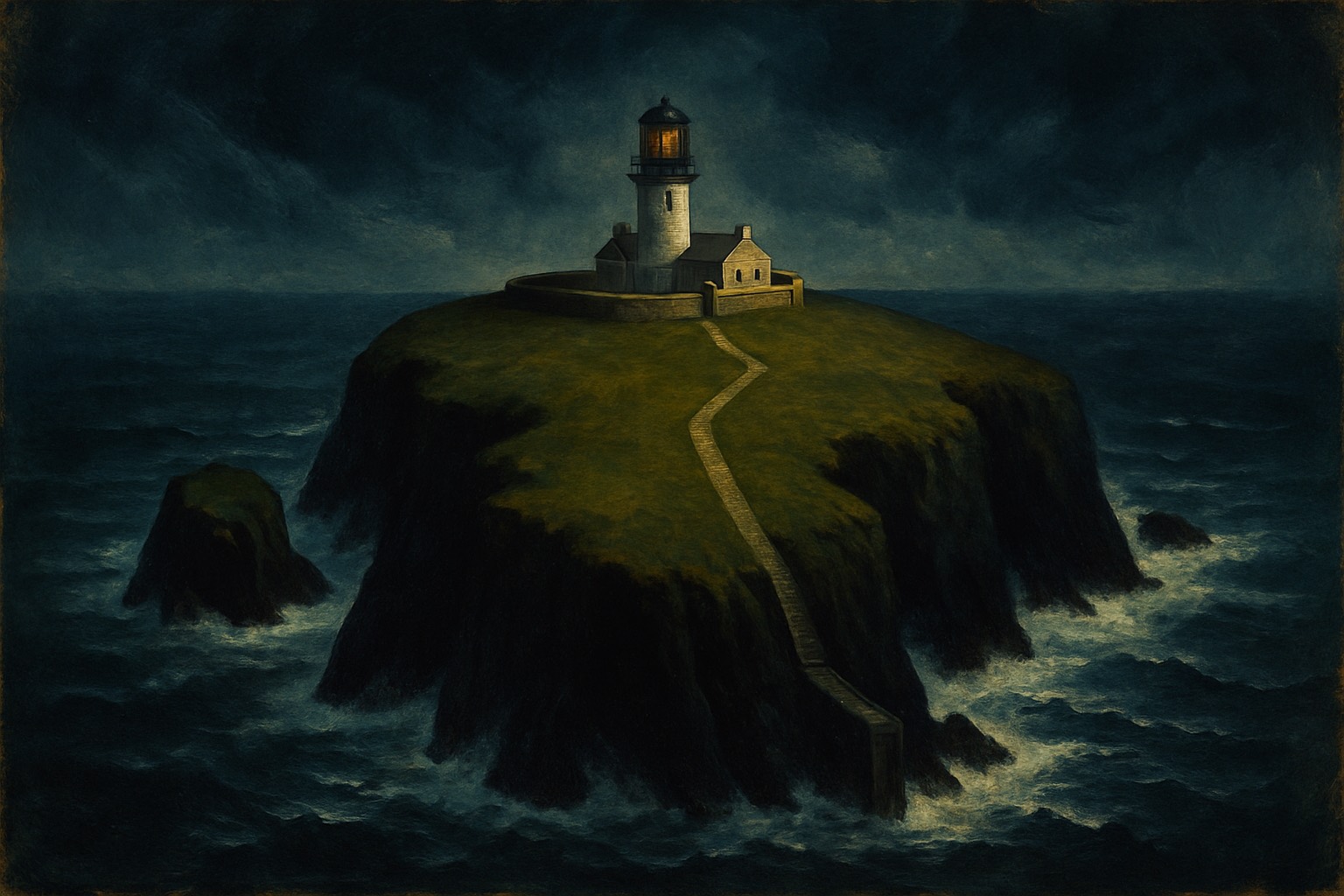
The lighthouse was in perfect working order. That was the problem.
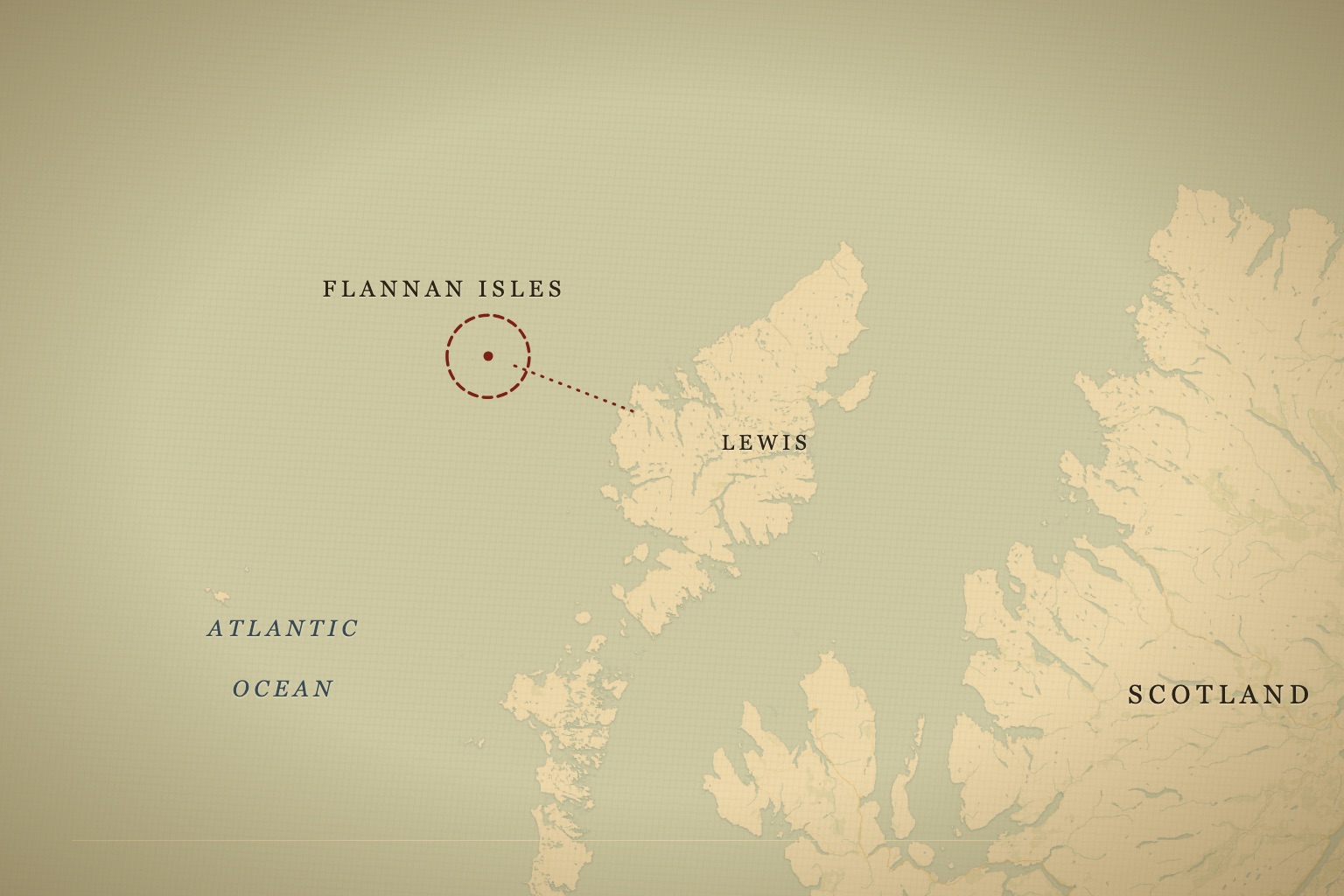
On December 26, 1900, the relief vessel Hesperus finally fought her way through days of foul weather to Eilean Mòr, the largest of the Flannan Isles — a cluster of uninhabited rock stacks twenty miles west of the Isle of Lewis in Scotland's Outer Hebrides. The routine was fixed: the ship would sound her whistle, a flag would go up at the lighthouse, and the keepers would come down to the landing to meet the boat. This time the whistle got no answer. No flag. No figures on the path. Captain James Harvie fired a rocket flare. Nothing moved on the island. When relief keeper Joseph Moore was finally rowed ashore and climbed the steep steps to the lighthouse alone, he found the entrance gate closed, the door closed, the beds unmade, the clock stopped — and no one there at all. Three experienced lighthouse keepers had vanished from a barren island half a mile long, and no confirmed trace of any of them has ever been found.
The Mystery
The Flannan Isles lighthouse was nearly new. Built for the Northern Lighthouse Board and first lit in December 1899, it stood on Eilean Mòr — "Big Island" in Gaelic, which is generous for a lump of cliff-ringed rock where the only previous structure was a ruined chapel attributed to the Irish saint Flannan. The islands had no permanent inhabitants and a longstanding reputation among Lewis crofters as an uncanny place; shepherds visited to graze sheep but, by tradition, did not stay the night.
The station worked on rotation: three keepers on the island at any time, a fourth ashore on leave. In December 1900 the men on the rock were James Ducat, the Principal Keeper, a veteran of about two decades in the lighthouse service with a wife and four children; Thomas Marshall, the Second Assistant; and Donald MacArthur, an Occasional Keeper — a trained substitute filling in for the regular assistant, William Ross, who was off sick. Ducat had reportedly taken the posting with some reluctance; the Flannans were an isolated, difficult station.
The first sign of trouble came not from the island but from the sea. On the night of December 15, 1900, the steamer Archtor, passing the Flannans en route to Leith, noted that the light — which should have been visible for miles — was not burning. The observation was logged and reported after the ship reached port, but it did not trigger an immediate response. The scheduled relief itself was already overdue: the Hesperus should have sailed around December 20, but severe weather held her back for days. When she finally anchored off Eilean Mòr on Boxing Day, eleven days had passed since anyone had seen the light lit.
Moore's search of the station, quickly joined by men from the ship, established the essential facts. The lamp was clean, trimmed, and ready to be lit. The ashes in the kitchen grate were cold. The kitchen itself was in order — the famous image of a half-eaten meal abandoned on the table appears nowhere in Moore's account. The clocks had stopped, unwound. And on the hooks by the door, the searchers found one set of oilskins and sea boots still hanging: Ducat's and Marshall's foul-weather gear was gone, but MacArthur's remained. Wherever the third man had gone, he had gone out into a Hebridean December in his shirt sleeves.
The Hunt
The Northern Lighthouse Board's superintendent, Robert Muirhead, arrived on December 29 to conduct the official investigation — and what he assembled remains the only hard evidence in the case. Muirhead brought something no later investigator could: he had inspected the station himself earlier that same December and knew all three men personally. His report is not a bureaucrat's paperwork; it reads like a man reconstructing the last hours of colleagues he had shaken hands with days before they died.
The station's records ran up to mid-December. The log had been written up through the 13th, with slate notes carrying the record to the morning of Saturday, December 15. The lamp had been prepared but not lit that night — matching the Archtor's observation. The condition of the kitchen and lamp room indicated the men had completed their morning duties and eaten a midday meal. Everything pointed to a single conclusion: whatever happened, happened on the afternoon of December 15, 1900.
The island itself gave Muirhead his answer — or most of one. Eilean Mòr had two landing places, east and west. The east landing was undamaged. The west landing was wrecked. A wooden box wedged into a crevice in the rocks 110 feet above sea level — used to store mooring ropes and landing tackle — had been torn out and smashed, its ropes strewn over the rocks below. Iron railings along the path were bent and twisted out of shape. A large stone had been displaced, and a lifebuoy fixed along the route had been stripped of its canvas by sheer force of water. And on the clifftop above, more than 200 feet above the sea, the turf had been ripped away from the edge. The west side of the island had been struck by seas of almost inconceivable violence — during a stretch of December storms that were, on the record, severe. To put the scale in perspective: damage at 110 feet above sea level means green water — not spray, but the sea itself — was reaching heights taller than a ten-story building.
Muirhead's official conclusion, delivered to the Board: on the afternoon of December 15, Ducat and Marshall had gone down to the west landing, likely to secure the ropes and tackle ahead of the worsening storm, and MacArthur — perhaps seeing an enormous sea bearing down on his colleagues — had rushed from the lighthouse without his oilskins to warn or help them. All three, Muirhead judged, were caught by an exceptional wave and swept into the sea. The bodies were never recovered; off those cliffs, in those waters, they would not be.
It was a sober, evidence-driven verdict. It has also never quite satisfied anyone — including, one suspects, the men who wrote it. Ducat left a widow and four children; MacArthur left a widow and two. The Board's file records the aftermath with Victorian brevity, and the lighthouse itself never missed another night: Moore and the relief crew took over the station immediately, lighting the lamp on the evening of the day they searched it.
The vanishing has kept its hold on screen storytellers as well — most recently in The Vanishing (2018), the Gerard Butler feature that dramatizes the three keepers' final days on the rock. It is fiction built on the case's real bones, and its existence says something true on its own: a century and a quarter later, the empty lighthouse still will not let anyone go.
What History Says
The documented case has two stubborn problems, and a century of embellishment sitting on top of it.
The first problem is the rules. Northern Lighthouse Board regulations required that the light never be left unattended — one keeper was to remain in the station at all times. Ducat, a twenty-year man, knew this absolutely. For all three keepers to be outside at once meant either a violation born of emergency, exactly as Muirhead surmised, or something that overrode procedure entirely. The second problem is MacArthur's coat. A keeper stepping out into a December gale on the exposed west side of Eilean Mòr without oilskins was either responding to something sudden and desperate, or was never intending to be outside long. Both details fit the rogue-wave scenario. Both also leave room for doubt, and the doubt is where the mythology moved in.
The embellishments deserve to be named, because they have nearly swallowed the real case. The overturned chair and the meal abandoned mid-bite come from Wilfrid Wilson Gibson's 1912 ballad "Flannan Isle" — a poem, not a report. The infamous log entries — Marshall supposedly writing that Ducat was "irritable," that MacArthur was crying, that a final entry read "Storm ended, sea calm, God is over all" — first surfaced decades later in sensational magazine retellings. No such entries appear in the official record, and the details they describe (keepers logging each other's emotional states) bear no resemblance to how lighthouse logs were actually kept. They are, by the general judgment of researchers, invention.
Stripped of all that, the alternative theories thin out fast. Foul play among the keepers has no supporting evidence and no motive on record. Abduction — by ship, spy, or anything else — founders on the wrecked west landing, which testifies to sea violence, not visitors. A later keeper at the station, Walter Aldebert, spent years in the 1950s studying the sea conditions there and documented waves capable of sweeping men from supposedly safe heights on that very landing — the closest thing to experimental confirmation the case has ever received. One refinement of Muirhead's account, proposed by later researchers, holds that MacArthur wasn't rushing to warn anyone: all three men may have gone to the landing together between squalls, misjudged a lull, and been taken by a single towering sea. The geology of the west inlet — a narrow gully that funnels and amplifies swells — makes freak waves there not freakish at all.
The Verdict
What the evidence actually shows is this: three capable men, a station in good order, duties performed through the morning of December 15, catastrophic storm damage at the west landing, one set of oilskins left behind, and no bodies. The most probable explanation — an exceptional wave taking all three men at or near the landing — was reached within two weeks of the event by the investigator standing on the ground, and nothing found since 1900 has overturned it.
And yet the case endures, because the probable explanation requires a chain of small improbabilities: the broken rule, the missing coat, all three men in the one lethal spot at the one lethal moment. The Flannan Isles are still there, still uninhabited, still hammered by the same seas; the lighthouse was automated in 1971 and keeps its watch with no keepers left to lose. The file on Ducat, Marshall, and MacArthur contains one afternoon that no one witnessed — and a verdict that is almost certainly right, which is not the same thing, and never will be, as knowing.
Explore the sites mentioned in this post on the interactive map.
Open the Tracker