The Dyatlov Pass Incident: The Tent Was Cut From the Inside
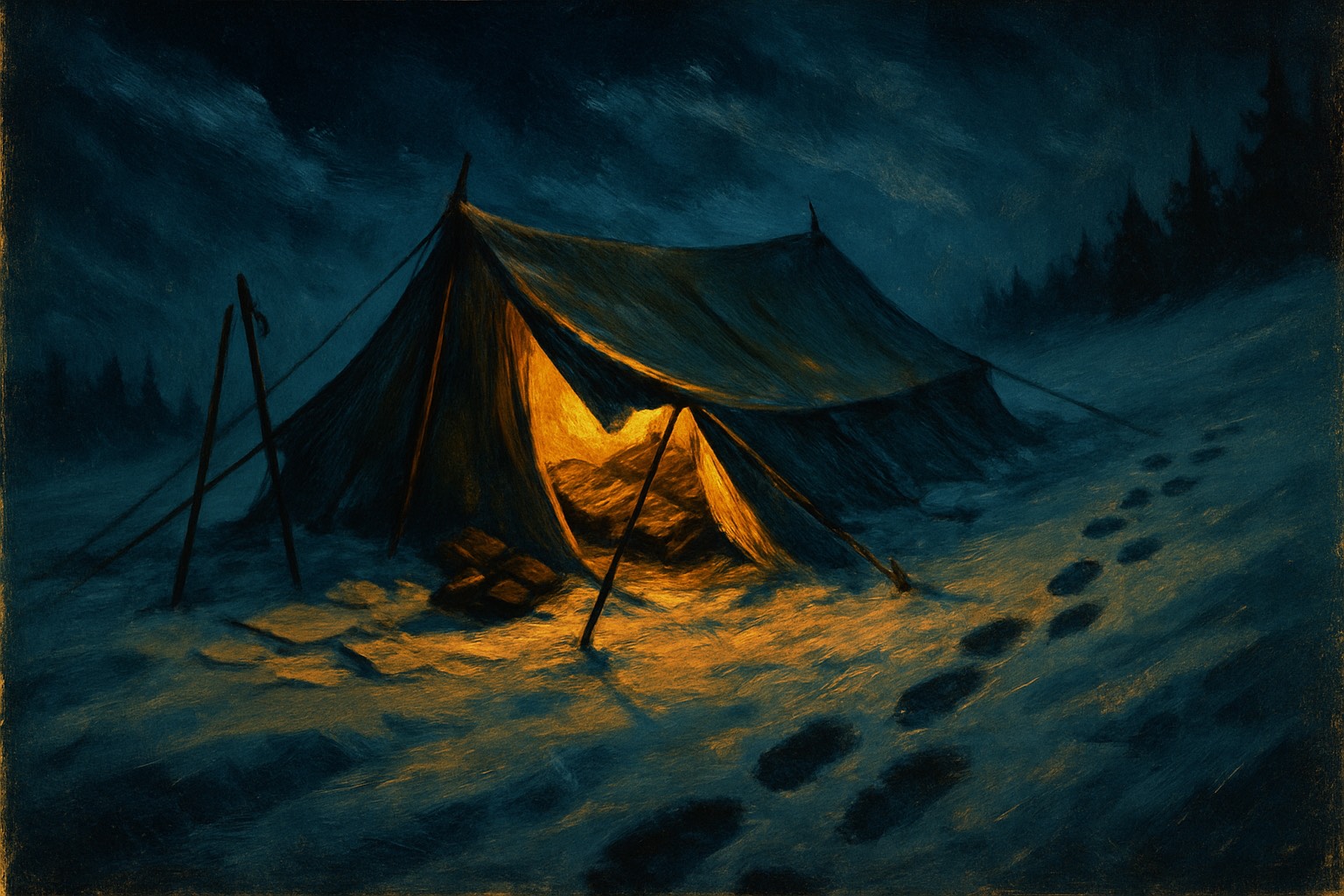
The searchers found the tent first, and the tent made no sense.
It stood on the bleak eastern shoulder of a mountain the local Mansi people called Kholat Syakhl, in the northern Ural Mountains of the Soviet Union, half-collapsed and drifted with snow. Inside, everything was in place: boots lined up, jackets folded, food laid out, a camera, diaries, money. The canvas had been slashed open — and forensic examination would later establish the cuts were made from the inside. Leading away downslope, searchers traced eight or nine sets of footprints in the snow, most of them made by people in socks, one in a single boot, walking — not running — down toward the treeline in the dark, in temperatures somewhere below minus 25 degrees Celsius. Every one of the nine people who made those tracks died on that mountain in the early hours of February 2, 1959. Sixty-seven years later, the question of what drove them out of that tent remains one of the most argued-over cold cases of the twentieth century.
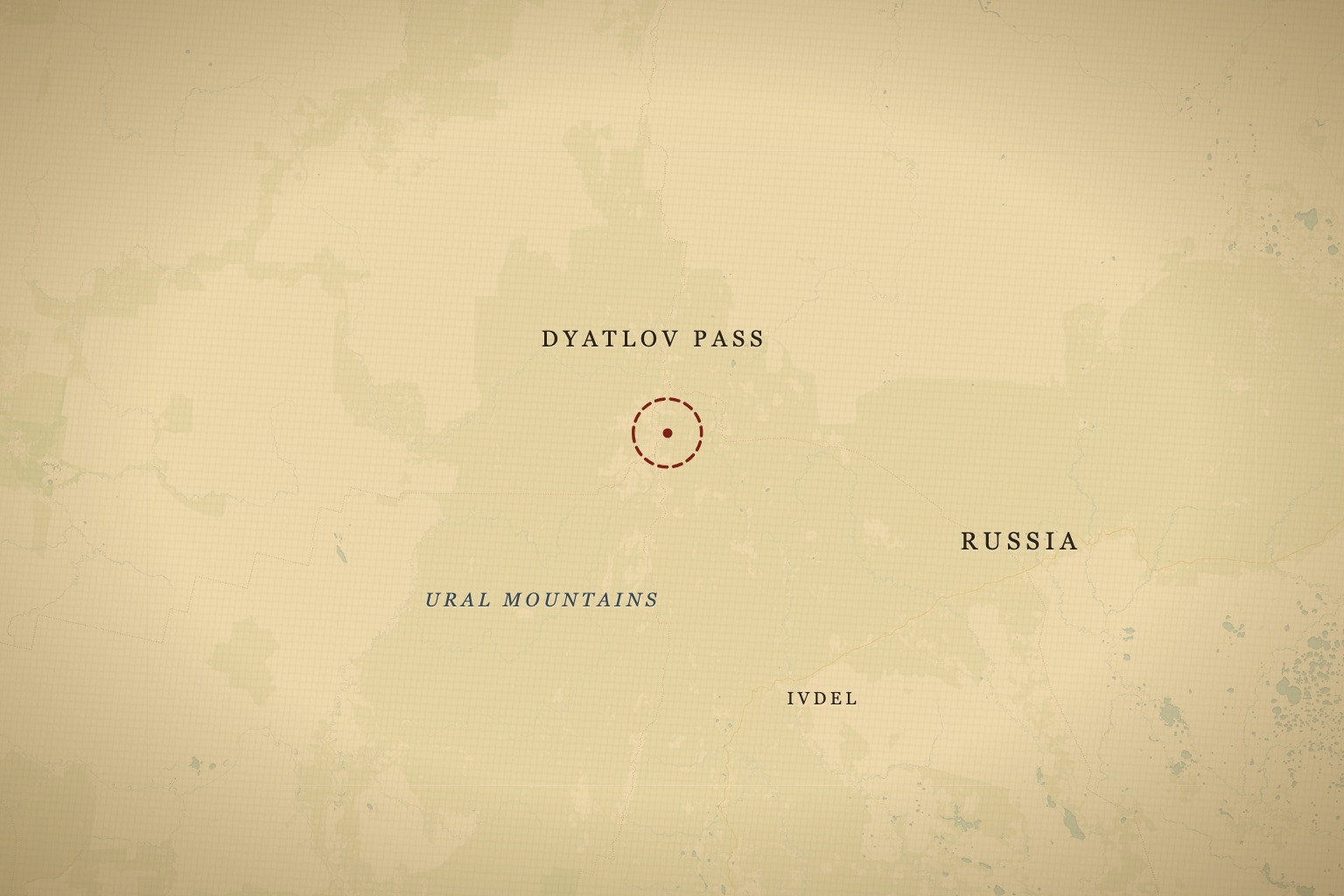
The Mystery
They were not amateurs. The group that set out from Sverdlovsk (today's Yekaterinburg) in late January 1959 was built around students and graduates of the Ural Polytechnical Institute, led by 23-year-old Igor Dyatlov, an experienced ski-tourist organizing a Grade III expedition — the highest difficulty classification then in use — toward Mount Otorten in the remote northern Urals. With him were Zinaida Kolmogorova, Lyudmila Dubinina, Rustem Slobodin, Yuri Krivonischenko, Yuri Doroshenko, Alexander Kolevatov, Nikolai Thibeaux-Brignolles, and one outsider: Semyon Zolotaryov, a 38-year-old war veteran and hiking instructor who had joined the group late. A tenth member, Yuri Yudin, turned back in the first days of the trek with joint pain — a decision that made him the sole survivor and, for the rest of his life, the group's mourner-in-chief.
The group's own cameras and diaries, recovered later, document the approach: cheerful, competent, unhurried. They rode trains and trucks north, skied along the frozen Lozva and Auspiya rivers, cached supplies for the return leg, and photographed each other constantly — the frames show grinning young people in a landscape of birch and deep snow. One of the last exposures on the recovered film shows the group digging in the snow to pitch camp in flat, failing light. On February 1 they made that camp on the open slope of Kholat Syakhl — short of Otorten — setting their large tent on the mountainside rather than descending to the forest below. It was a defensible mountaineering decision: camping high preserved altitude for the next day's push, and the group had a stove and experience with exposed bivouacs. Dyatlov had told his sports club to expect a telegram from the village of Vizhai around February 12. It never came. Delays were common enough that real alarm took days to build; the first search parties — fellow students, then police and military with aircraft — went out around February 20, and on February 26 searchers found the tent.
Then, over the following days, they found the people. Under a large cedar at the forest edge, about a mile downslope from the tent, lay Doroshenko and Krivonischenko beside the remains of a small fire, dressed in underwear; branches on the cedar were broken off to a height of several meters, as if someone had climbed it. Between the cedar and the tent, spaced out along the slope as though they had died trying to climb back up, lay Dyatlov, then Slobodin, then Kolmogorova. Autopsies attributed all five deaths to hypothermia; Slobodin had a fracture in his skull, judged survivable.
The remaining four were not found until May 4, when melting snow revealed them in a ravine 75 meters beyond the cedar, under roughly four meters of snow, near a hollowed-out den floored with branches and scraps of clothing cut from the earlier victims. These bodies changed the case entirely. Thibeaux-Brignolles had a major skull fracture. Dubinina and Zolotaryov had massive chest injuries — multiple fractured ribs — of a force the examining physician compared to a car crash, yet with no corresponding external wounds. Dubinina was missing her tongue and eyes; Zolotaryov his eyes. And several items of the group's clothing, when tested, showed traces of radioactive contamination.
The Hunt
The Soviet criminal investigation, led by prosecutor Lev Ivanov, worked the case through the spring of 1959 — and its file, preserved and eventually made public, is the bedrock every serious researcher builds on.
The physical reconstruction was solid as far as it went. The tent had been cut open from inside and abandoned suddenly, without boots or coats, by people who then moved downhill in a more or less orderly group — the footprints showed walking, in a rough formation, not a panicked scatter. At the treeline the group split: a fire was built at the cedar, a snow den was dug in the ravine, and at least three of the nine tried to make it back up the slope toward the tent and its equipment. Everything found was consistent with a group executing textbook survival responses to a catastrophe that had already happened. What the file could not supply was the catastrophe itself.
Suspicion fell first on the indigenous Mansi, whose land it was; they were questioned and cleared — the Mansi had no conflict with hikers, and the only footprints on the slope belonged to the group. Ivanov pursued stranger leads, too. Other hikers and military observers in the region reported glowing orbs in the night sky in February and March 1959 — sightings now generally attributed to Soviet R-7 rocket launches, but which left a deep mark on Ivanov, who decades later, after retirement, said openly that he had believed something unexplained was involved and that he had been ordered to close the case. Close it he did, in May 1959, with one of the most quoted non-conclusions in forensic history: the hikers had died because of "a compelling natural force" they were unable to overcome. The file was archived. The area was closed to hikers for three years. The pass where they died now carries Dyatlov's name.
The case never went quiet — and in 2019 the Russian Prosecutor General's office formally reopened a review, examining the original file with modern methods. Its 2020 conclusion: an avalanche forced the group from the tent, poor visibility prevented them from returning to it, and the cold did the rest.
Television keeps returning to the pass as well. Discovery's Expedition Files took the case up in its first season — the episode "Tragic Endings" (Season 1, Episode 3, December 2024), with Josh Gates re-examining how nine capable, experienced hikers came to cut their way out of their own tent into a Urals night that killed them all.
What History Says
For decades the avalanche explanation was the official answer almost nobody accepted. The slope above the tent was shallow — around 20 degrees, below the textbook threshold for avalanches. There was no debris field, no buried tent, and the footprints leaving it were intact on the surface. The injuries were wrong for hypothermia, and the theories that rushed into the gap ranged from the grounded (infrasound-induced panic from wind vortices, a military weapons test gone wrong, given the radiation traces and Krivonischenko's job at the Mayak nuclear facility) to the untethered (everything from escaped prisoners to a menk, the Mansi wild man).
Then, in 2021, the case got its most important scientific treatment. Johan Gaume, head of the Snow Avalanche Simulation Laboratory at EPFL in Switzerland, and Alexander Puzrin of ETH Zurich published a peer-reviewed study in Communications Earth & Environment modeling a specific mechanism: a small slab avalanche. Their reconstruction addressed the classic objections one by one. The slope, measured properly, was closer to 30 degrees than 20. The group had cut into the snowpack to level a platform for the tent — undermining the slab above it. Katabatic winds that night transported snow onto the slope for hours after the group went to sleep, loading the cut until it failed — explaining the fatal delay between pitching camp and disaster. And the injuries: a dense slab of wind-packed snow falling on sleepers lying rigid on ski-lined bedding, the models showed, could produce exactly the pattern seen — crushing chest and skull fractures without external wounds. Follow-up fieldwork at the pass in subsequent winters documented slab avalanches on comparable nearby slopes, closing the "avalanches don't happen there" objection.
The remaining oddities have prosaic candidate explanations on the record: the missing tongue and eyes are consistent with months of decomposition in running meltwater and scavenging, per forensic review; the radioactive traces plausibly track Krivonischenko's documented work at a nuclear site (he had been involved in cleanup after the 1957 Kyshtym disaster); the light orbs match logged rocket activity. None of these is proven beyond argument. All of them are ordinary.
The Verdict
Here is what the evidence actually shows: nine competent people abandoned a defensible shelter in a manner that was urgent but not mindless, executed rational survival maneuvers in lethal conditions, and were killed by cold and by massive blunt trauma consistent with snow-slab impact. The slab-avalanche model is the only published explanation that accounts for the timing, the injuries, the intact footprints, and the group's behavior without inventing an actor no evidence supports. The scientists behind it are careful to say what official conclusions never were: it is the most plausible explanation, not a certainty. No one saw the slab fall. No one ever will.
That gap — between "best-supported" and "known" — is the engine that keeps Dyatlov Pass alive. Yuri Yudin, the tenth hiker, spent five decades declining to accept any official account before his death in 2013; he was buried alongside his friends at the memorial in Yekaterinburg, where seven of the nine lie together. The mountain is still there, still remote, still visited every winter by researchers and pilgrims retracing the route. The tent, the diaries, the photographs, and the autopsy reports all survive. What does not survive is a single witness to the moment that mattered. Nine people walked down that slope in their socks, and the snow that recorded their footprints kept every secret above them.
Covered On Screen
- Mystery of Dead MountainExpedition Unknown · S7 E4
- Siberia's Coldest CaseExpedition Unknown · S7 E5
Explore the sites mentioned in this post on the interactive map.
Open the Tracker