The Disappearance of Amelia Earhart: What the Evidence Actually Shows
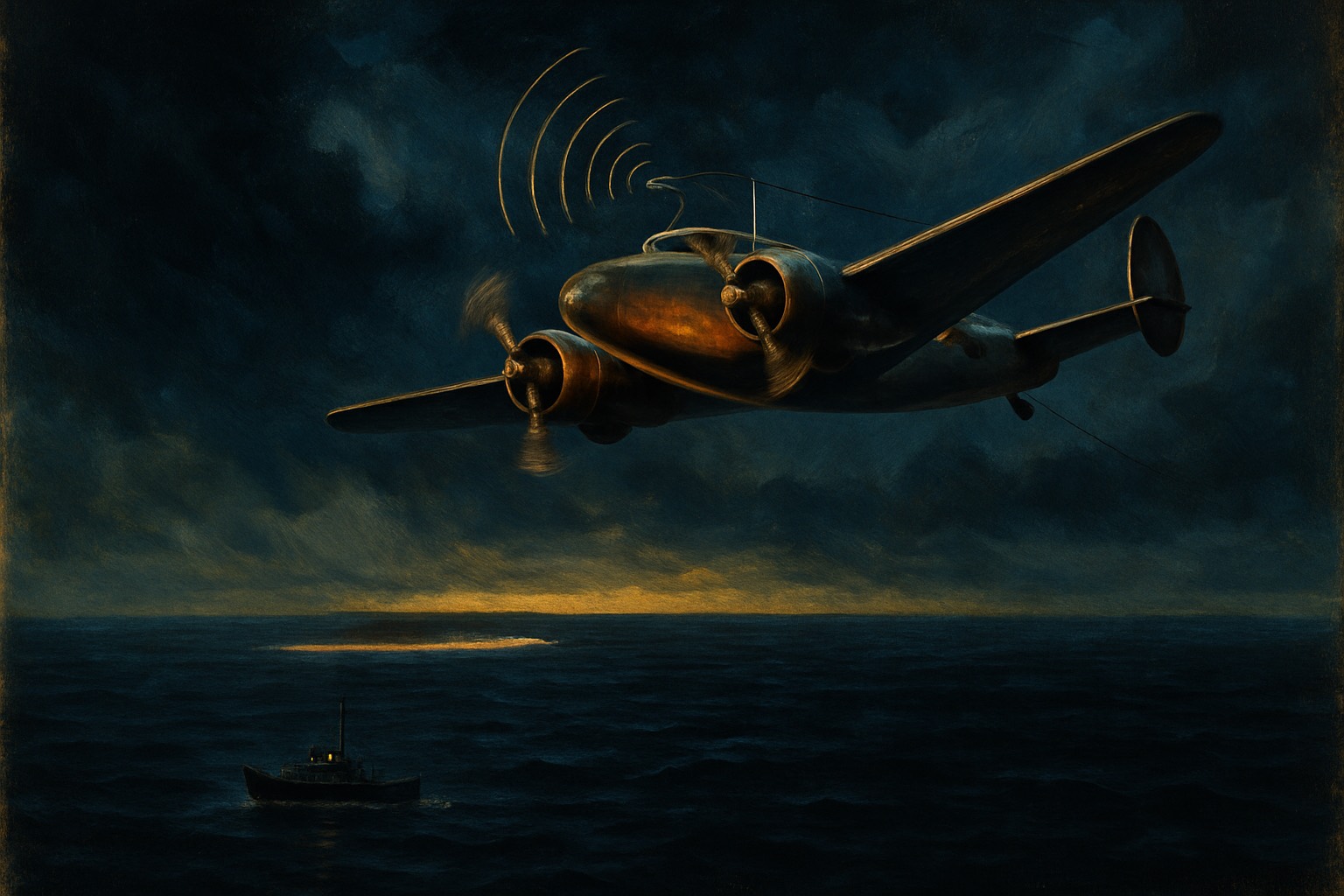
The ocean has kept its secret for nearly a century.
On July 2, 1937, Amelia Earhart and her navigator Fred Noonan vanished over the Pacific Ocean while attempting to circumnavigate the globe. Their final radio transmission, crackling across 2,200 miles of open water, hinted at desperation: "We are running north and south." Then silence.
The Mystery
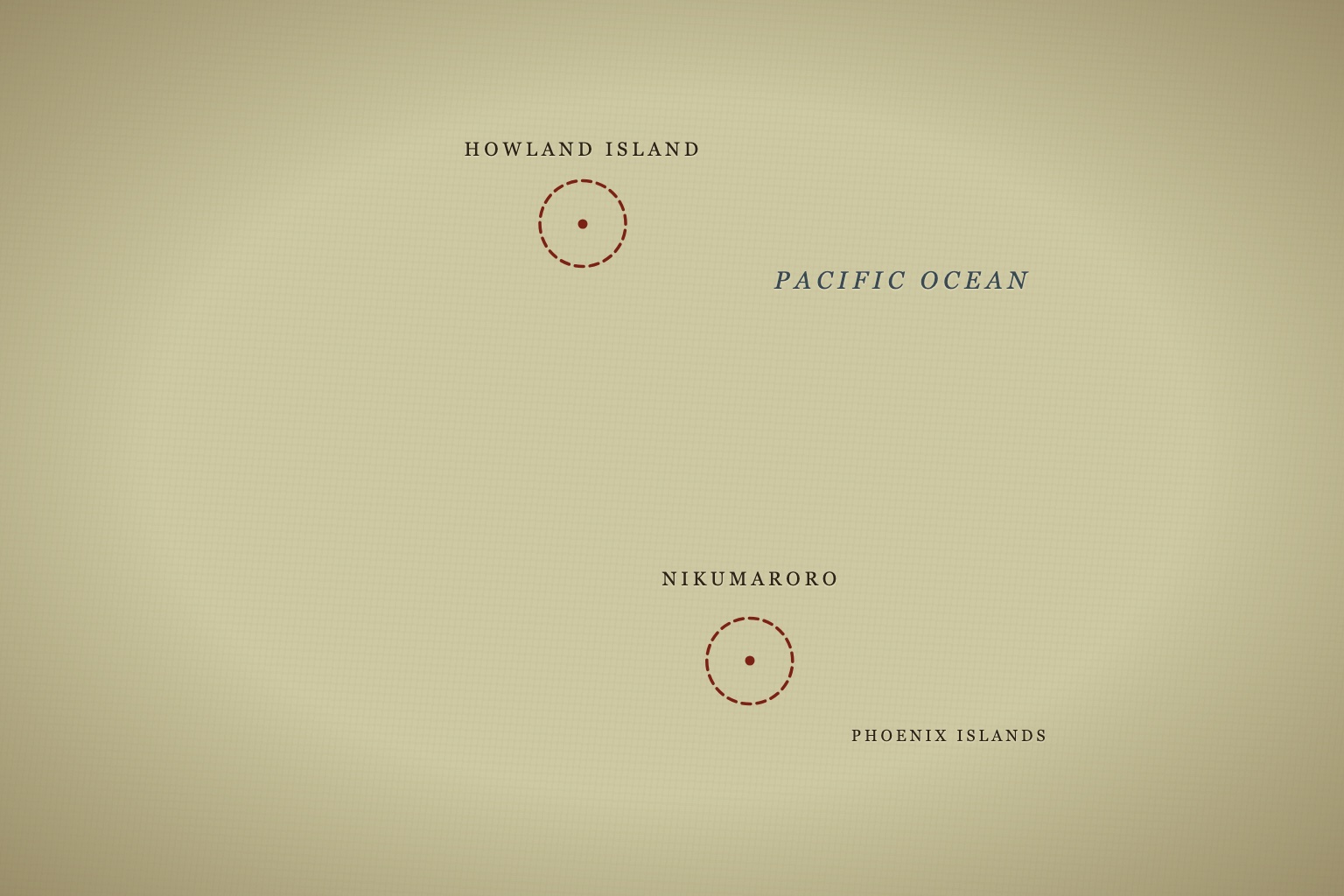
Earhart and Noonan were in the final stretch of an audacious 29,000-mile circumnavigation route, one of the most dangerous aviation undertakings of the era. They had already flown approximately 22,000 miles—across South America, Africa, India, and Southeast Asia—in a twin-engine Lockheed Electra. The hardest leg was saved for last: a 2,556-mile flight from Lae, New Guinea to Howland Island, a coral atoll in the Pacific so small (1.6 miles long, half a mile wide) that finding it at sea level was less a matter of navigation and more a matter of blind faith.
Howland Island is nearly invisible. In 1937, it had no airfield, no reliable lighthouse, and no radio operator stationed there—just a runway hastily laid out by the U.S. Navy and a small detachment of personnel watching the horizon. The atoll sits at the intersection of two critical coordinates: International Date Line behavior on the east-west axis, and equatorial monotony on the north-south. A navigation error of even a few miles would render the island unfindable.
At approximately 8:43 a.m., Earhart transmitted a final radio message to the USS Itasca, a Coast Guard cutter stationed off Howland Island: "We are on the line 157 337. We will repeat this message. We will repeat this on 6210 kilocycles. Wait." As fuel dwindled, her transmissions grew more urgent. "We must be on you but cannot see you. We have been unable to locate you." The problem was catastrophic: the frequencies were mismatched. Earhart transmitted on 3105 kHz; the Itasca's direction-finder worked on 500 kHz. They could hear her voice but she could not hear their confirmatory signals. She was broadcasting into the void, receiving no guidance from the ground.
Her final transmissions, spanning two hours, reported clouds. She reported limited fuel. She reported a line of position: 157-337. She did not report the island in sight. Then she was gone.
The U.S. Navy launched the largest sea search in history to that point: sixteen ships and sixty-six aircraft sweeping 250,000 square miles of ocean. They found nothing.
What Josh Gates Found
Expedition Unknown opened its very first case file on Earhart — a two-hour series premiere (Season 1, Episode 1, January 2015) that sent Josh Gates from the jungles of Papua New Guinea to a dig beneath a house in Fiji, where the documented trail of a box of bones recovered from Nikumaroro in 1940 finally goes cold. The hypothesis behind that bone trail: that Earhart and Noonan, unable to locate Howland Island, ditched near Nikumaroro instead, a remote coral atoll roughly 350 miles southeast of Howland, survived the crash, and signaled for help from the island before succumbing to the harsh conditions.
The island work itself belongs to TIGHAR—The International Group for Historic Aircraft Recovery—which has mounted multiple expeditions to Nikumaroro since 1989, and to National Geographic's 2019 special Expedition Amelia, which sent Robert Ballard, the man who found the Titanic, to scour the atoll's reef slope for the Electra. None of it has produced a smoking gun. What it has produced is something more interesting: a patient accumulation of physical details, each individually ambiguous, that collectively build a credible alternate scenario.
The physical evidence TIGHAR researchers have catalogued includes fragments of aluminum alloy matching the composition of the Electra's fuselage, campfire residue suggesting repeated occupation, bird and fish bones stripped clean by human hands, a sextant box identical to the one Earhart carried, and—most significantly—records of a partial human skeleton discovered on Nikumaroro in 1940 by a British colonial officer. That skeleton, consisting of thirteen bones, was classified at the time as likely male. The bones have since been lost. Additionally, TIGHAR found a woman's shoe sole of 1930s American manufacture and fragments of an anti-freckle cream jar consistent with a brand Earhart used.
But the evidence also carried caveats. The aluminum fragments, while similar in composition to the Electra's airframe, were not unique—that alloy was common in 1930s aviation. The shoes, though consistent with the era and Earhart's known size, were mass-produced. The skeletal remains, discovered decades after any potential crash, had been lost to institutional neglect and were no longer available for definitive DNA analysis. What the evidence proved was possible; it did not prove inevitable.
Then there is the Japanese capture theory—the claim that Earhart and Noonan were intercepted by Japan and taken prisoner. It has never been substantiated. Decades of research have produced no credible documentation: no prisoner records, no credible eyewitness accounts that survived scrutiny, no physical evidence. The theory persists in popular culture but not in serious research circles.
The honest conclusion is that the Nikumaroro hypothesis is neither proven nor implausible. It is the most evidence-backed alternative to the crash-and-sank theory. The island was uninhabited in 1937. If they landed there and died there, their remains and wreckage may still be present, buried or submerged in the atoll's reef.
Historical Context
The official U.S. government position has always been that Earhart and Noonan ran out of fuel and went down at sea near Howland Island. It is the simplest reading of the evidence and still held by most aviation historians. The ocean near Howland is deep—17,000 feet in places—which explains why no wreckage has been found. Most aircraft that go down at sea are never recovered.
The Nikumaroro hypothesis gained serious traction in 2018 when Dr. Richard Jantz, a forensic anthropologist at the University of Tennessee, published a peer-reviewed re-analysis of the 1940 bone measurements. Using modern skeletal morphology databases, Jantz found the bones more similar to Earhart than 99 percent of individuals in a large reference sample, and concluded that until definitive evidence shows otherwise, the most convincing argument is that they are hers. The original 1940 classification as male, he argued, reflected the limited forensic tools available at the time. Contemporary anthropological measurements, he noted, were consistent with a woman of Earhart's documented height and build. However, critics pointed out that such measurements, without bone collagen for DNA testing, remain probabilistic rather than definitive. What Jantz demonstrated was that the hypothesis was not ruled out—a far weaker claim than proof.
The bones themselves cannot be directly tested—they were lost in transit between the British colonial Pacific Islands Service and Fiji in the early 1940s and have never been relocated. DNA testing, which could resolve the question definitively, requires finding them first. However, TIGHAR researchers noted that Earhart's mother and sister had both lived into the modern era, making the possibility—remote but real—of extracting viable DNA from maternal-line relatives for comparison. That avenue, too, remained largely unexplored due to institutional hesitation and the degraded state of available samples.
There is also a credible body of radio evidence. Between July 2 and July 18, 1937—after the official search was called off—at least 57 radio signals were received by operators across the Pacific that appeared to originate from the Electra's frequency. Most were dismissed at the time. A 2012 analysis by TIGHAR found that the pattern of received signals was consistent with transmissions from a downed aircraft on or near a reef, transmitting during low tide when the landing gear would not be submerged. One theory, advanced by radio historians, proposed that at low tide, the aircraft or survivors on an atoll might have achieved enough elevation to transmit over the horizon. The signals have not been definitively authenticated, but they have not been definitively debunked either.
The honest summary: the crash-and-sank theory is parsimonious and officially accepted. The Nikumaroro castaway theory is physically possible, forensically supported, and unproven. The Japanese capture theory has no evidentiary basis.
Why It Matters
Amelia Earhart was more than a celebrity pilot. She was the first woman to fly solo across the Atlantic Ocean, a record-holder for transcontinental flight, the founder of an experimental airline, a consultant to Purdue University on women in engineering, and a deliberate symbol of female capability at a moment when aviation was almost entirely male-dominated.
Her disappearance was not in a freak accident and not in battle—she disappeared at the absolute outer edge of what was physically possible to attempt with the technology of her era. That is why the mystery has lasted 89 years. It is not morbid curiosity. It is something closer to recognition: here was a person who pushed past every limit that existed, and the limit that stopped her was a 1.6-mile island in millions of square miles of ocean. The margin between success and silence was that thin.
The unresolved question of her fate keeps her present. Every new expedition, every bone re-analysis, every recovered artifact is an argument that the story isn't finished. The file remains open.
> Update — July 2026: The file is about to get its most direct test in decades. On July 28, the Archaeological Legacy Institute and Purdue Research Foundation depart Majuro, in the Marshall Islands, for Nikumaroro to examine the "Taraia Object" — a roughly 12-to-14-meter anomaly in the island's lagoon, first noticed in satellite imagery in 2020, whose dimensions match the Electra's fuselage and tail. The team gets five days on-site with drones, magnetometer, sonar, and sediment probes; this phase is identification only, with excavation and any recovery planned for 2027–28 — and, if it is the Electra, an eventual return to Purdue, where Earhart's plane was funded and where she intended it to end up. The evidence-first caveat belongs here too: TIGHAR's Ric Gillespie, who has led more Nikumaroro fieldwork than anyone, told CNN the object is "very clearly a tree" washed in by storms — and TIGHAR has searched that shoreline with metal detectors in past fieldwork and found nothing. By mid-August, one of them will be wrong. We'll publish a full follow-up when the expedition reports.
Visit the Region
If you find yourself drawn to this mystery, a few destinations offer tangible connection to Earhart's life and final flight:
Purdue University Archives and Special Collections, West Lafayette, Indiana
- Home of the George Palmer Putnam Collection of Amelia Earhart Papers — the world's largest Earhart repository, donated by her widower in 1940
- Nearly 5,000 items, including her pilot's license, medals, goggles, and the leather flight helmet and suede jacket from her 1932 solo Atlantic flight
- An Earhart exhibit runs in the Archives; the papers themselves are fragile and fully digitized, so physical access is limited — check ahead
Amelia Earhart Hangar Museum, Atchison, Kansas
- Opened 2023; built around Muriel, the last remaining Lockheed Electra 10-E — the same model she flew in 1937
- Interactive exhibits plus original artifacts on loan
Smithsonian National Air and Space Museum, Washington, D.C.
- Holds Earhart artifacts and aviation history exhibits documenting the 1937 flight
- Permanent collection includes correspondence, photographs, and flight records
Amelia Earhart Birthplace Museum, Atchison, Kansas
- The restored Victorian home where she was born in 1897, operated by the Ninety-Nines — the women-pilots organization Earhart herself co-founded and first led
- Documents her early years and ambitions
Oakland Aviation Museum, Oakland, California
- Earhart departed her final flight from Oakland's North Field
- The museum covers the Golden Age of aviation with Bay Area connections and Earhart's pre-flight preparations
The mystery endures because the questions remain unanswered. In an era of GPS and satellite communication, the idea that two skilled aviators could vanish without a trace still shocks us. It shouldn't. The Pacific Ocean at 1937 was as vast and indifferent as it had been for millennia. What Earhart's disappearance reveals is not that the mystery was unique, but that her life made us want to solve it.
Covered On Screen
- Amelia EarheartExpedition Unknown · S1 E1
Explore the sites mentioned in this post on the interactive map.
Open the Tracker